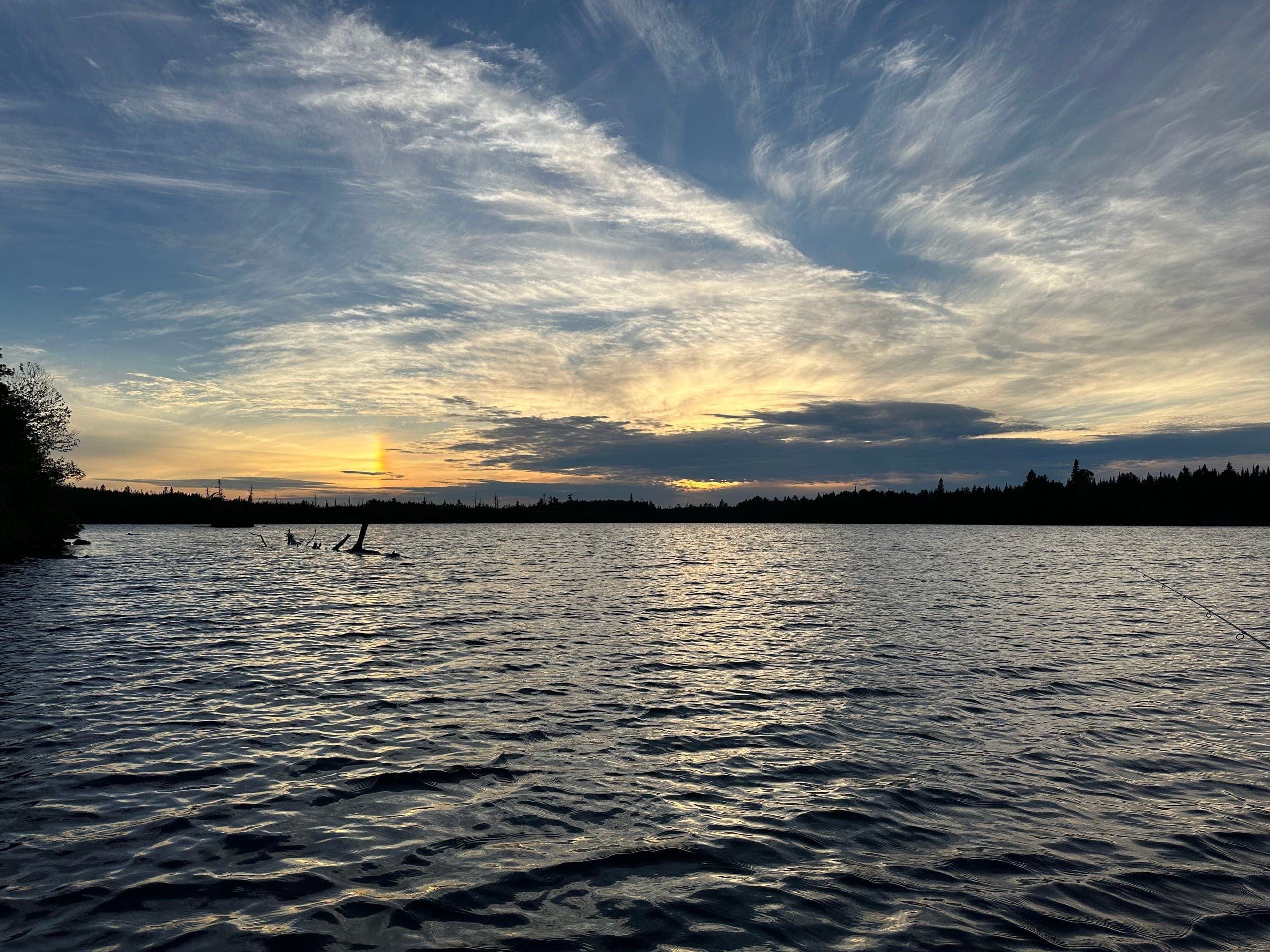
The BWCA is about 1,200 lakes in northern Minnesota connected by portage trails. No motors, no roads, no people unless you camp with them. A first trip looks simpler than it is — the real work is planning it right.
At a glance
- Permit needed
- Yes, for every overnight trip
- Quota season
- May 1 – September 30
- Cost
- About $6, plus roughly $16 per person per night
- First-trip length
- Three to five days
- A comfortable day
- 6–10 miles paddling, under 100 rods of portaging
Getting a permit
Every overnight trip requires a permit. From May 1 through September 30, entry points have daily quotas — a cap on how many groups can enter each day. Popular entry points like Moose Lake fill within hours of going on sale January 1st at recreation.gov. The fee is around $6 plus roughly $16 per person per night.
Outside that window (October through April), you can self-issue a free permit at any ranger station the day you enter. No online competition, no crowds, but the weather gets serious and days get short.
Choosing an entry point
Your entry point is where you legally enter the wilderness. Once you're in, you can go anywhere in the BWCA. But your permit is tied to a specific entry point on a specific date, so pick carefully.
Ely area (Moose Lake, Fall Lake, Kawishiwi) is the most popular because the outfitter infrastructure is excellent and the portages into good lakes are manageable. Gunflint Trail entries (Seagull, Saganaga) give you access to bigger open water and more remote country, but it's a longer drive. Tofte and Isabella entries on the south side are quieter with longer portages. Crane Lake far west has some motorized lakes nearby.
For a first trip, shorter portages and outfitter support matter more than solitude. Ely is the safest choice.
Planning your route
A route is a chain of lakes connected by portages. Portage distance is measured in rods — one rod is 16.5 feet, 320 rods is a mile. A 300-rod portage is hard work. A 50-rod portage is nothing.
For a first trip, aim for 6–10 miles of paddling and no more than 100 rods of portaging per day. Three to five days total. Long enough to settle in and see country, short enough that you won't be overwhelmed by gear and logistics.
Base camping — staying two or more nights at one site instead of moving every day — is worth considering. You rest more, see wildlife better, and the trip feels less like a forced march.
What to bring
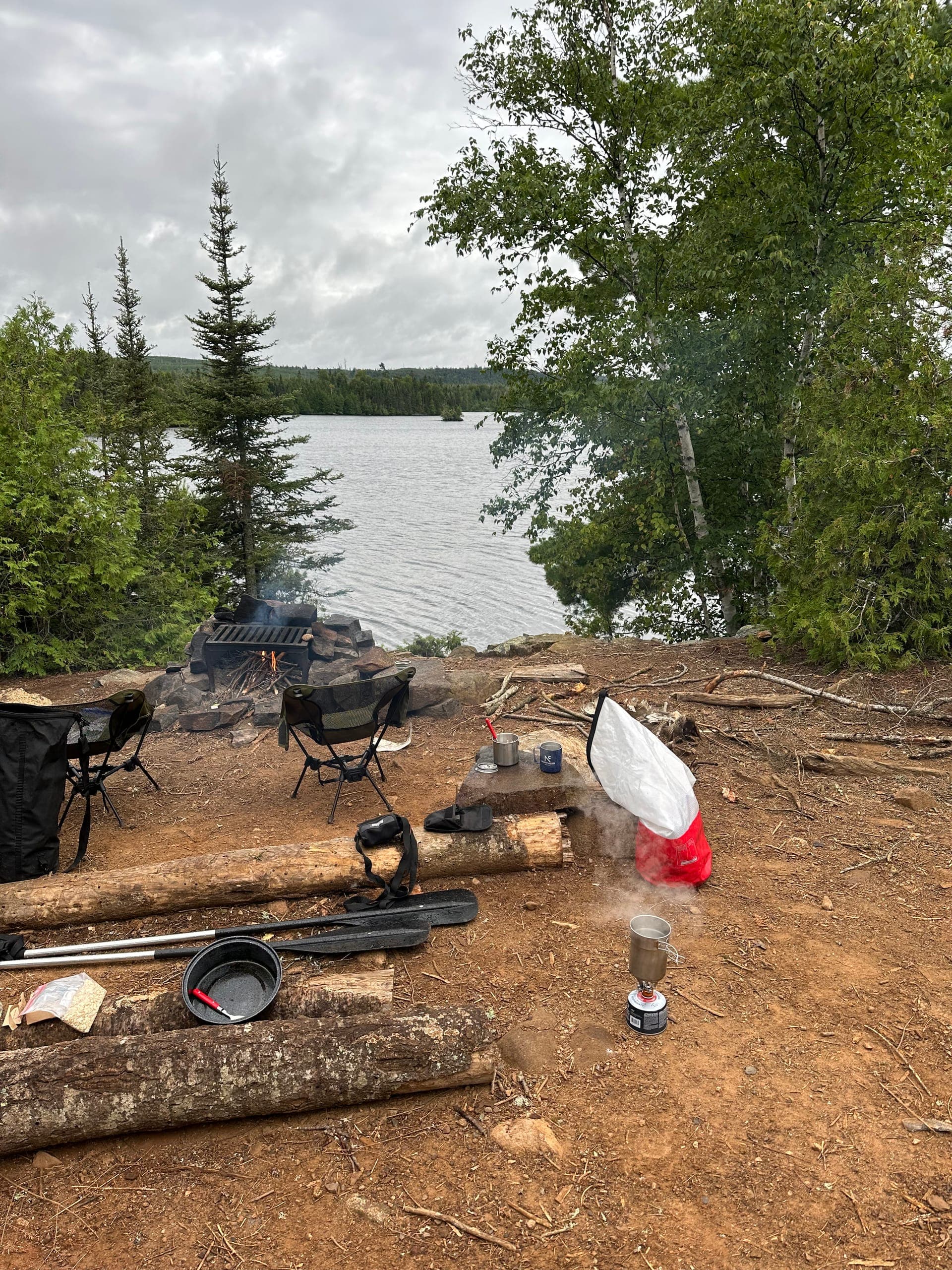
Everything you pack gets carried over every portage. Most people overpack on the first trip and regret it by portage three. Start with a rentable tandem canoe, two large Duluth packs with waterproof liners, and a 3-season tent. Bring a Sawyer Squeeze water filter — Giardia is in the water and you do not want to find that out two weeks later.
Cotton kills. Wet cotton doesn't dry and doesn't insulate. Everything that touches your skin in cold water should be synthetic or wool. Rain jacket, rain pants, fleece, wool socks. Bring fewer clothes than you think — a 5-day trip needs maybe two sets of paddling clothes and one camp layer.
For food, freeze-dried is convenient but expensive. Build around shelf-stable basics: oatmeal, nut butter, ramen, hard cheese, summer sausage, crackers. Plan 1.5 to 2 lbs per person per day. Repackage everything into zip-locks before you leave — cans and glass bottles are not allowed in the BWCA.
The rules
- Camp only at designated Forest Service sites — they have a fire grate and box latrine
- Group size maximum: 9 people, 4 watercraft per permit
- No cans or bottles, no glass containers
- Campfires allowed in grates when not under a fire ban — always have a stove backup
- Pack out all trash including food scraps
- Hang your food or use a bear canister — never leave scented items in your tent
- Fishing requires a valid Minnesota license
Timing and bugs
May and October are shoulder seasons with fewer people and free self-issue permits. June is warm but black flies peak the first two weeks. July is the most popular month. August is dry with minimal bugs. September has fall color but colder nights.
If you're going in June, bring a head net. Bug spray is not optional. By August, bugs are manageable.
Next steps
Use the entry point finder to narrow your choices. Get a Fischer Map for your area and spend an evening studying the route before you go. Rent from an outfitter in Ely if you don't own gear — it costs less than you'd expect and you avoid the hassle of getting a canoe to the trailhead.